GhostBat RAT: How RTO-Themed Android Malware Steals Your UPI PIN
A multi-stage Android RAT that poses as the mParivahan RTO app, spreads over WhatsApp, and drains accounts through a fake UPI payment flow. It hides on GitHub, talks to a Telegram bot, and even mines crypto on the side. Here's how it works and what to watch for.
On this page
"GhostBat" is the name Cyble's research team gave to a resurgent family of RTO-themed Android malware hitting Indian users through 2025. It impersonates mParivahan, the government's vehicle-services app, and it is a clean example of how modern Indian banking malware works: no exploit, a believable lure, and a surprisingly layered delivery chain designed to get past both the user and the analyst.
Cyble observed more than 40 distinct samples of this family. This is a breakdown of how one works, from the WhatsApp message to the stolen UPI PIN.
At a glance
- Family: GhostBat RAT (Cyble naming)
- Masquerades as: mParivahan / RTO challan app
- Delivery: WhatsApp and SMS smishing with shortened URLs → APKs hosted on GitHub
- Core theft: fake UPI "₹1 verification" that harvests the UPI PIN; banking SMS/OTP exfiltration
- C2: device registration via a Telegram bot (
GhostBatRat_bot); PIN exfil to Firebase - Extras: emulator/anti-analysis checks; some variants bundle a cryptominer
- Scale: 40+ samples observed from September 2025 onward
The delivery chain
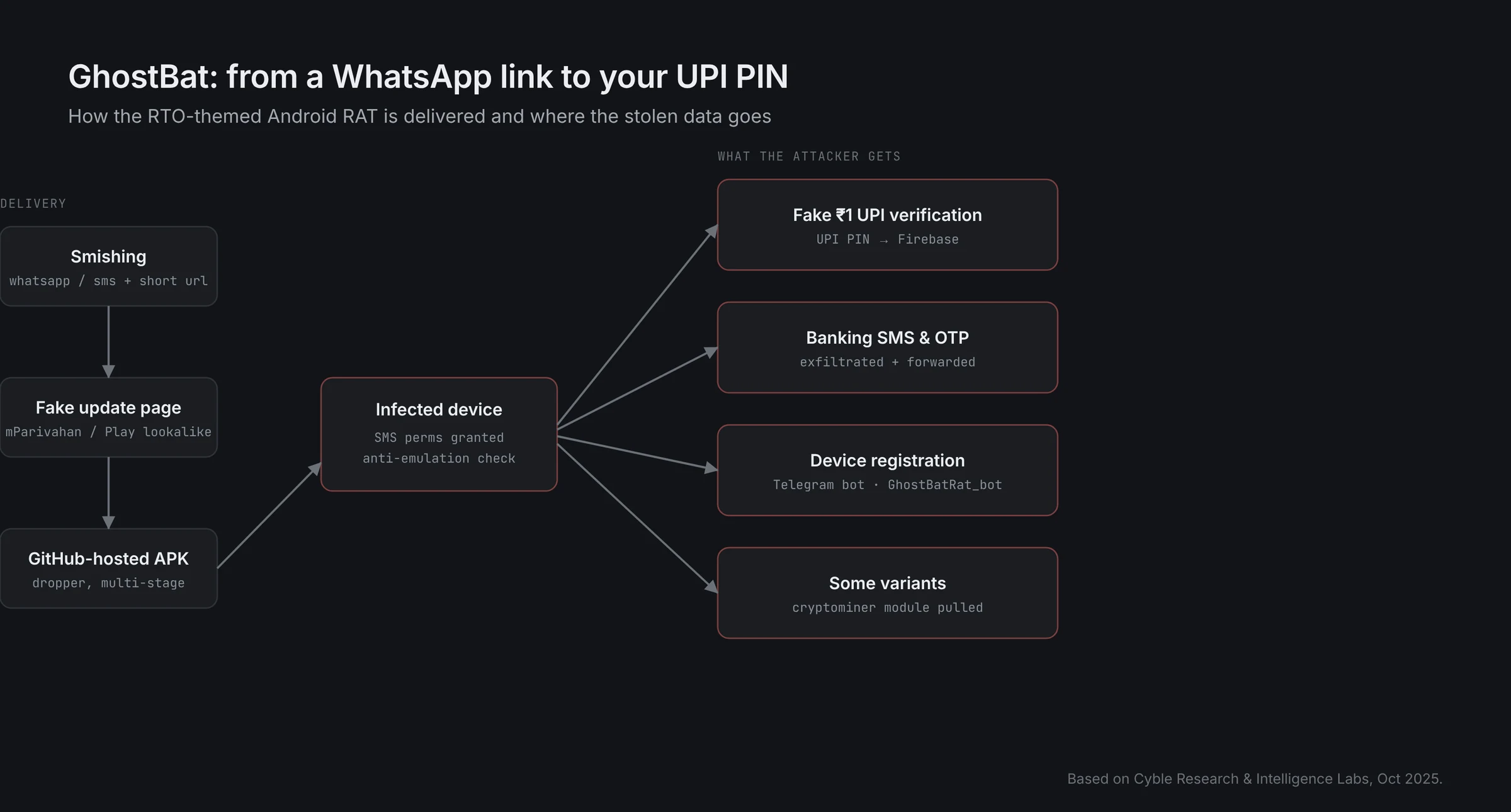 How GhostBat is delivered and where the stolen data goes
The chain is deliberately indirect:
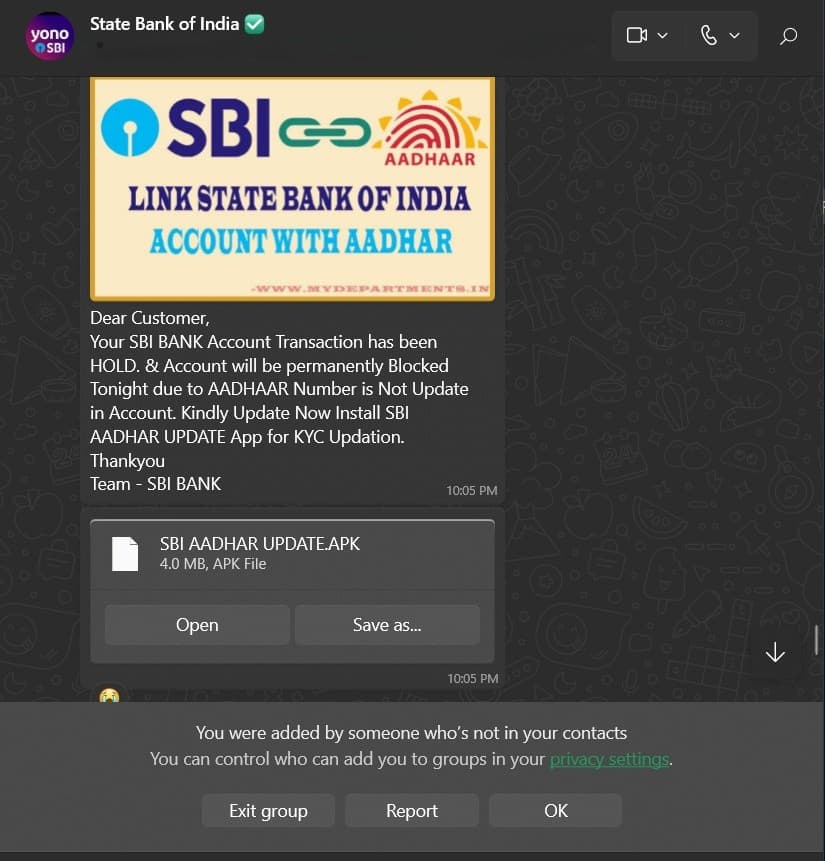
- Smishing. A WhatsApp or SMS message about a traffic challan carries a shortened URL (tinyurl, short.gy, shorturl.at, cutlink). Short links hide the real destination and are trivially rotated when one gets blocked.
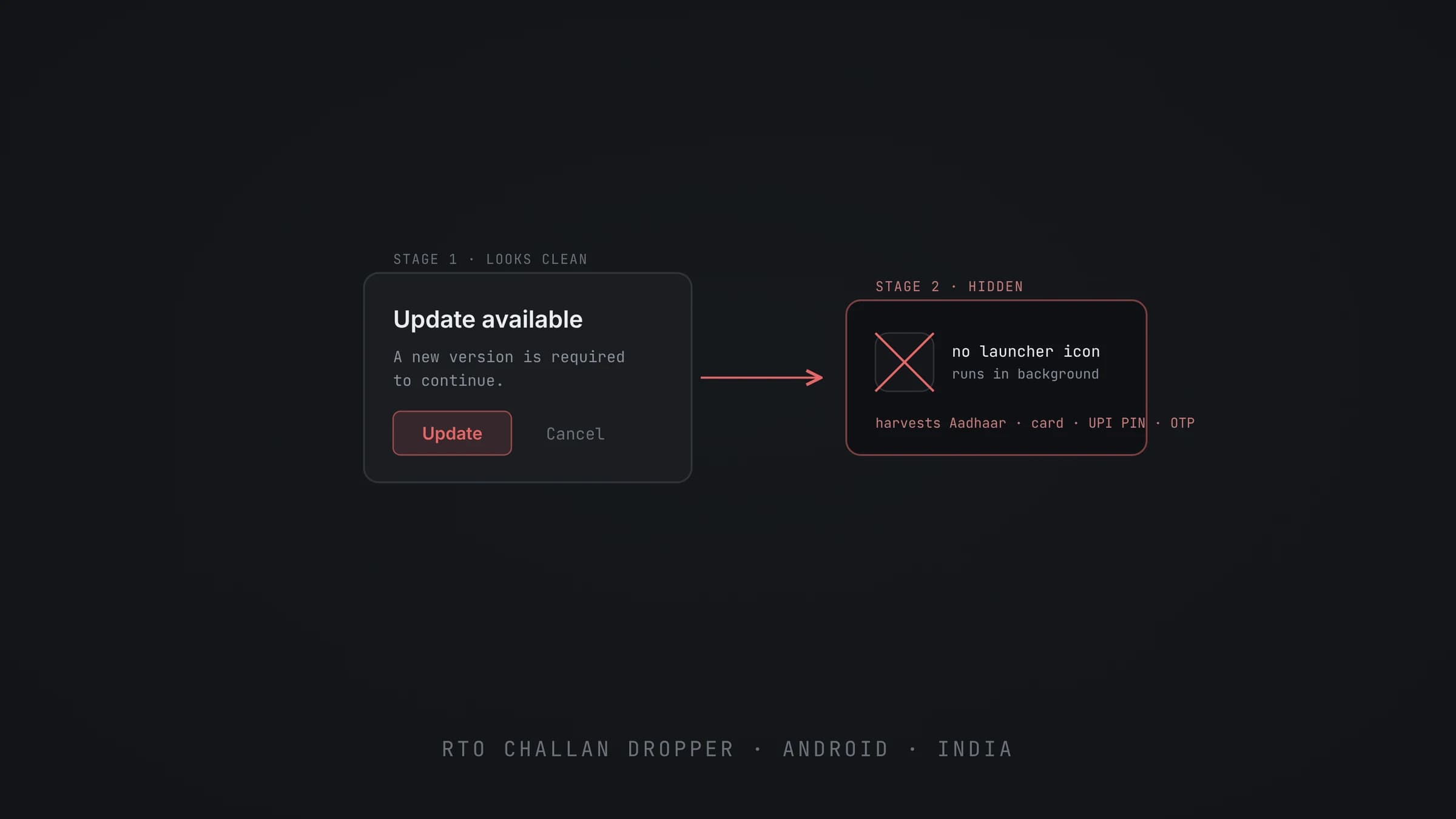
- A fake update page. The link leads to a page dressed up as a Google Play update or the mParivahan app, which walks the victim into allowing installs from unknown sources.
- GitHub-hosted APKs. The actual payloads are pulled from
raw.githubusercontent.comand GitHub release links, sometimes via compromised websites. Hosting on a trusted developer domain helps the download slip past basic reputation checks. - A multi-stage dropper. The APK uses ZIP-header manipulation (changing the compression method to STORE) and native
.sopackers to frustrate static analysis, then unpacks the real logic.
How it takes the money
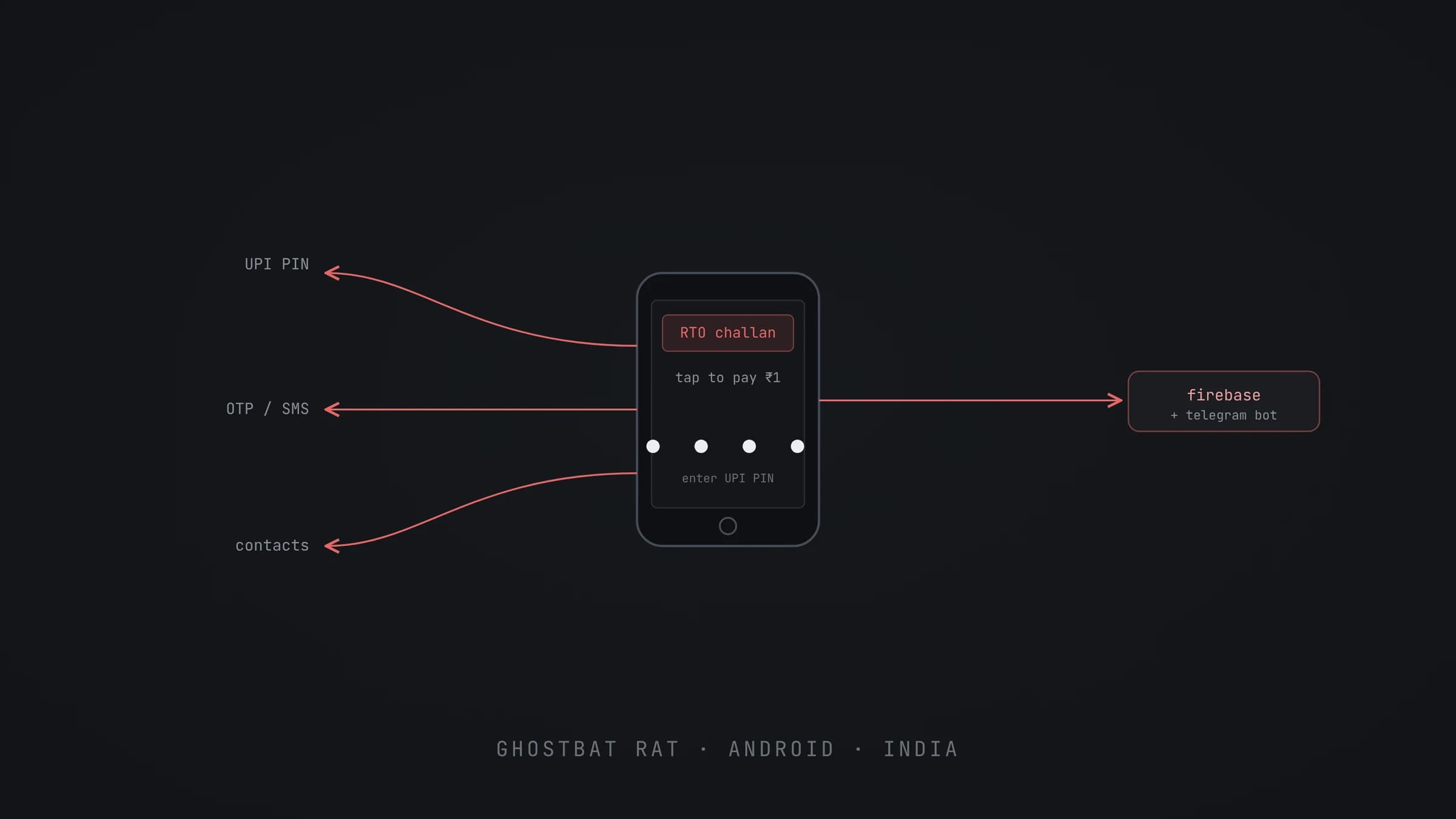
Once installed, the app shows a fake mParivahan page asking for a mobile number and vehicle details, then moves to the part that matters: a ₹1 "ownership verification" payment. That leads to a counterfeit UPI interface and a PIN entry screen. The entered UPI PIN is sent to a Firebase endpoint.
At the same time, the app abuses its SMS permissions:
- Messages containing banking keywords are exfiltrated to C2.
- Incoming SMS can be forwarded to an attacker-supplied number, which is how the operators grab OTPs or complete UPI device-binding on their own hardware.
The important mental model: the app doesn't need to defeat your bank. It gets you to hand over the PIN, and it quietly relays the OTP. The bank sees a correctly authenticated transaction.
The tradecraft
GhostBat is more careful than the average fraud APK:
- Anti-analysis. It checks CPU architecture and device manufacturer and terminates on x86/x86_64 (i.e. in many sandboxes and emulators). Strings are heavily obfuscated, payloads are XOR- and AES-decrypted, and native libraries build API names in memory and resolve them at runtime via JNI.
- Telegram for C2. Device registration goes through a Telegram bot,
GhostBatRat_bot— the detail that gave the family its name. Telegram bot APIs are a cheap, resilient control channel that blends into normal HTTPS traffic. - Firebase for exfil. The MITRE mapping in Cyble's report lists Firebase Cloud Messaging for C2 and a Firebase Realtime Database URL for the stolen PIN.
- Cryptomining. Some variants download and run a miner module during execution, squeezing extra value out of the device.
- Low detection. VirusTotal coverage was low at the time of analysis, as is typical for freshly packed samples.
Indicators to hunt for
Cyble published hashes and infrastructure; the types of indicator matter more than any single value, since the operators rotate them constantly:
- Hosting: APK URLs on
raw.githubusercontent.comand GitHub release pages; some compromised sites. - Smishing: shortened URLs (tinyurl, short.gy, shorturl.at, cutlink) in challan-themed messages.
- C2: a Telegram Bot API endpoint for device registration (
GhostBatRat_bot); a Firebase Realtime Database URL for PIN exfiltration. - On-device: an app requesting SMS permissions right after install, then a fake payment flow that asks for a UPI PIN to receive a refund.
Pull the current hashes and URLs straight from the tracker feed or Cyble's report, and feed them to your mobile EDR / MDM and network filtering.
Defence
- For users: never install an app from a challan/bill link, and remember the rule that defeats this entire family — you only ever enter a UPI PIN to send money, never to receive a refund. A ₹1 "verification" that asks for your PIN is theft.
- For banks/fintechs: this malware exists to steal the SMS OTP and the UPI PIN. Reduce reliance on SMS OTP, bind approvals to a device the user actually controls, and risk-score first-time payees. Watch for an OTP read and a transfer completing seconds apart on a newly enrolled device.
- For defenders: Play Protect and modern Android's restrictions on sideloaded apps requesting SMS access blunt this; keep them on. Treat an mParivahan or RTO "app" delivered outside the Play Store as malicious by default.
GhostBat is a reminder that the APK scams draining accounts across India aren't crude. The lure is dumb on purpose; everything behind it is not. The broader ecosystem this sits in — the Telegram storefronts, the resale, the cash-out — is covered in The APK Is the Exploit.
This article reflects public information as of 20 October 2025.
Sources
Related research
More malware analysis →